
If you’ve been thinking about getting the Hume Health Body Pod, you’re probably not just wondering what it can measure but you’re also asking whether you can really trust the numbers. It is just something that makes us feel like “Really accurate meh?” Or “Is this smart scale worth buying?”
Some other concerns will be like
- “Will the readings be accurate — or will they keep changing every time I step on it?”
- “Is it really as close to a DEXA scan as they claim, or just marketing talk?”
- “Will the app actually help me track my progress — or end up giving me headache?”
- “And of course… for the price ah, is it really worth it?”
Don’t worry, you’re not the only one thinking this way. I was thinking the same thing, but I still went ahead to buy it to try it out.
Like most people, I think the hume health body pod is good because it gives deeper insights into fat, muscle, and visceral fat trends. But at the same time, I also read some reviews where people are facing syncing issues, inconsistent results, or felt unsure whether the data is reliable enough to guide real health decisions.
So in this review, we’ll skip the hype and fancy promises and instead let me share my own experience on what the Body Pod does well, where it struggles in everyday use, and whether it truly delivers value for your health goals.
Accuracy
I think this is the top of the list of many consumers even for myself. Is the numbers correct? Here is what I found out.
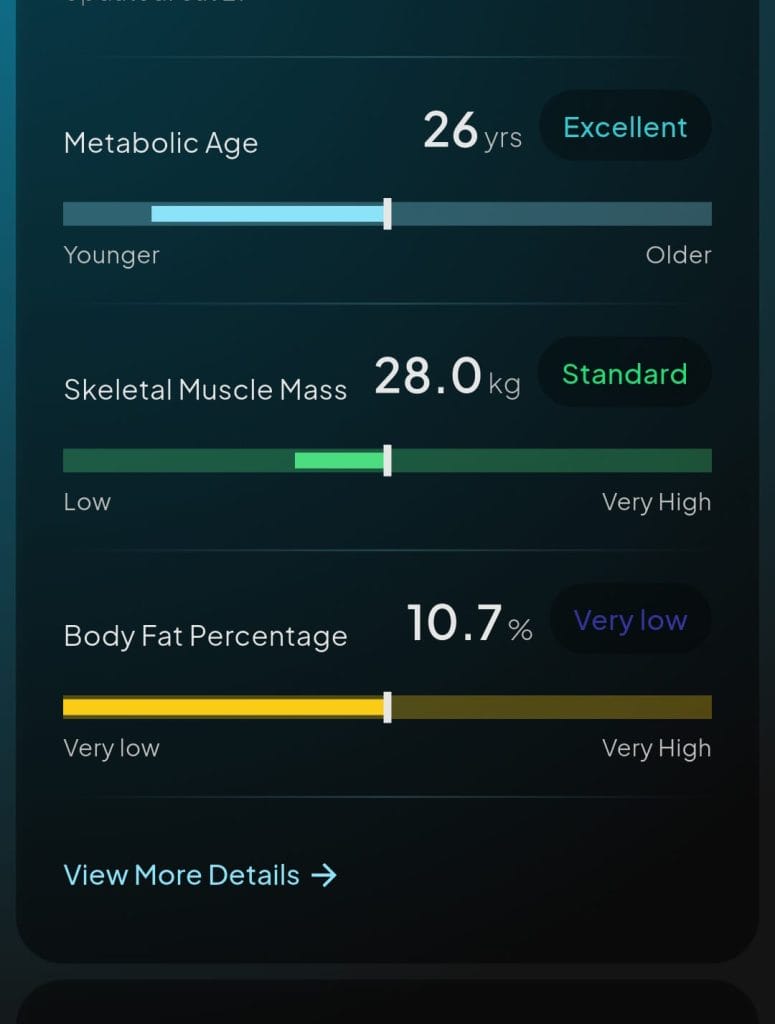
Here is my readings. I am weighing about 55-56kg (I was close to 60kg previously). My aim was to lose fats and retain muscle mass as much as possible.
So as shown, my body fats is about 10.7%. Just a disclaimer, this is not the latest readings. It is the readings of the first take. I had a lot of activity that period of time, so I managed to lose a lot of fats. But anyway, the point is my fat percentage is about 10-11%.
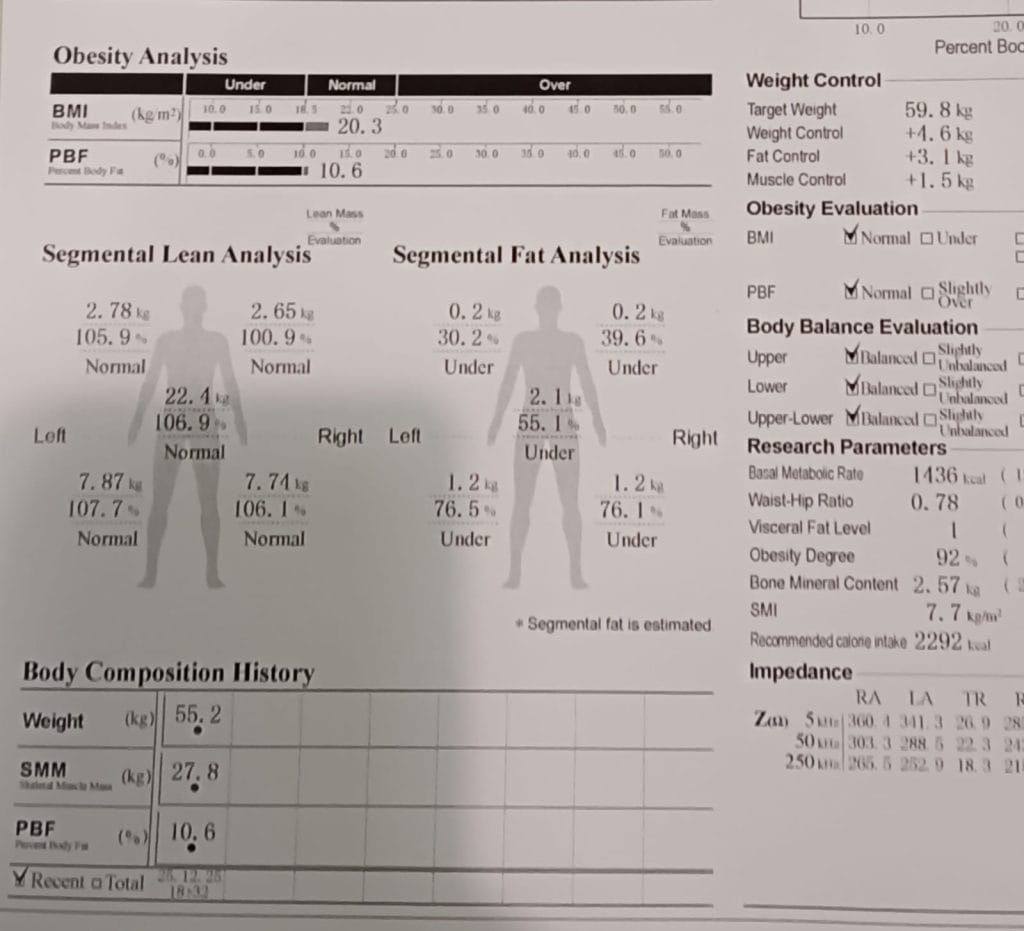
Bioelectrical Impedance Analysis (BIA) Readings
So I went to Johor and wanted to try out classpass there. I went to Kampung Gym and saw a BIA machine in the gym – that alone makes my visit very worthwhile. It may not be Dexa, but it is next thing that I can rely on.
Anyway, in the BIA readings, it detects my body fats (%) as 10.6%. Again, I do a lot of walking in JB – so high activity level for that period.
Also, the muscle mass, it is near the same as per the Hume Body Pod readings.
Accuracy: Good
Ease of use
Before hume health body pod, I use another weighing scale – claiming to measure similar things too. It also have an app. At first glance, sure Hume Health Body Pod use color psychology to make it look premium while the alternative one looks more basic. But in terms of user friendliness, I find the alternative one to be better. The humehealth is full of upselling and annoying user onboarding – sure to convert to sales but too pushy. And I want to measure of my family member and I cannot do that. Each family members have to download the app, go through the pushy onboarding for upselling (which of course we didn’t buy), before we can actually measure. All of us need to connect to the Hume Health Body Pod.
On the other hand, the alternative app is more user friendly (except that it has annoying ads recently added). You can measure for multiple family members with 1 app installation. No pushy upselling or onboarding wizards.
HumeHealth Body Pod
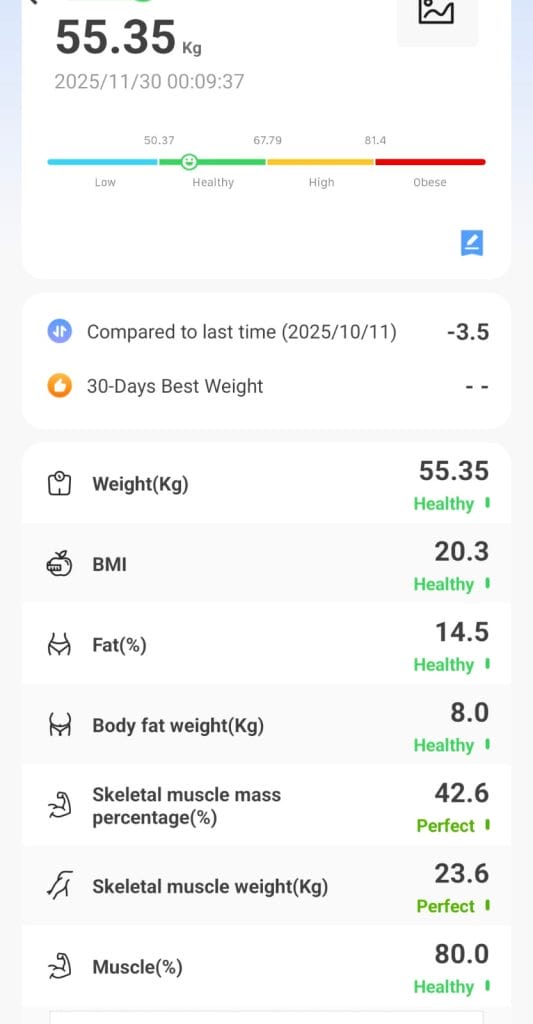
Alternatives Weighing Scale
Ease of use: Weak
Price
This is something you may want to consider carefully. In my honest opinion, it is worth considering if you fall into one of the following groups:
- I want to track my body fat because I am serious about achieving a specific body composition.
- I want to track my body composition because my job requires it.
- I want to track my body composition because I want to take better care of my health.
- I want to help others (such as close friends) achieve their desired body composition, and having this machine makes it more convenient. (Least likely to be satisfying)
For (4), I say it is the least likely to be satisfying because the app has a poor user interface and is overly focused on upselling. However, if you have a combination of reasons — for example, both (1) and (4) — then it may still be worth considering.
If your reason is simply to try it out or you are not very particular about body composition, then a cheaper weighing scale is sufficient. The one I was using previously cost only about $10–$20.
That said, you will also need some basic nutrition knowledge if you want to pursue reasons (1) to (3). Many social media sources can be confusing, and their content often falls into categories such as “telling you what you want to hear about why you can’t lose weight,” “telling you what to eat without proper context,” or “demonising certain ‘fad’ diets.” Some of this information is only useful if you already have prior knowledge. But if you are completely new to nutrition, it can feel misleading.
For example, when someone says “don’t eat sugar,” this can be interpreted differently by different people. Some may think it means avoiding only sweet foods, while others may demonise anything sweet — which might lead to misunderstandings such as thinking bread or biscuits are fine as long as they aren’t sweet, or just removing the cream from an Oreo and assuming it’s healthier.
From a nutritional standpoint, what it really means is — do not overload your body with sugar, which also includes carbohydrates. Carbohydrates refer to bread, rice, fruits, biscuits, etc., not just sugar. The key word is “overload,” because your body still needs carbohydrates. If you have certain conditions, such as diabetes, you should aim to consume more complex carbohydrates (such as sweet potatoes, refrigerated rice, or dates) and avoid simple carbohydrates like biscuits or white bread, which are known to cause blood sugar spikes. Even the way you cook food can affect your blood sugar — for example, do not cook sweet potatoes until they are very soft, because although they may taste nicer, they are more likely to cause a blood sugar spike.
Although I am a website developer, I also hold a diploma in food and nutrition, which is why I am sharing this information. I hope to help others improve their diet, or at least gain some basic nutritional knowledge.